THCA vs. CBD: two acids, two very different legal outcomes
THCA and CBDA are made from the same parent molecule and share a formula. Heat sends one to delta-9 THC and the other to CBD, and on Dec. 11, 2026, federal law sends them down different roads.
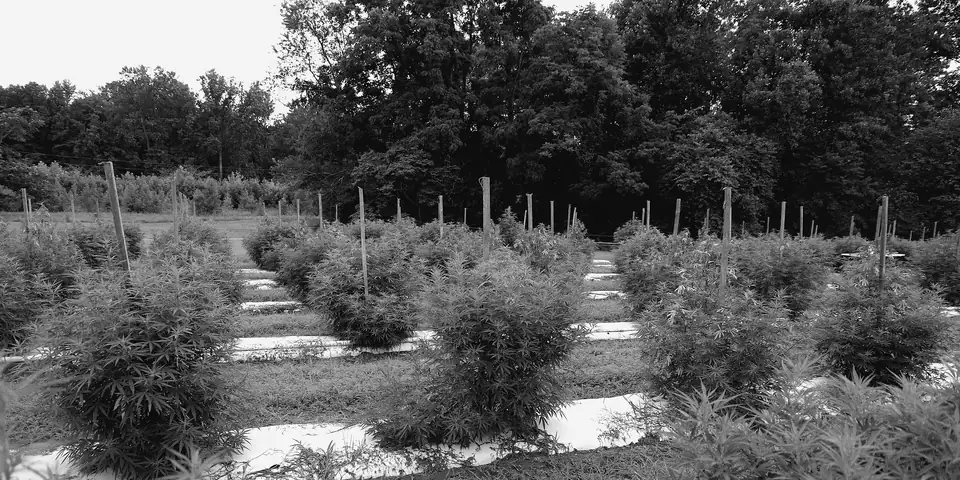
The short answer. THCA and CBD come from sibling molecules. The plant makes THCA and CBDA from the same parent, and heat turns THCA into intoxicating delta-9 THC and CBDA into CBD, which is not intoxicating. That chemistry decides the law: from Dec. 11, 2026, federal hemp rules count THCA but not CBD, under the law as it stands Oct. 3, 2026.
So CBD flower and CBD products stay in the hemp lane if their THC is low enough. High-THCA flower does not.
THCA and CBD side by side
| THCA | CBD | |
|---|---|---|
| What the plant makes | THCA itself | CBDA, the acid form |
| Made from | CBGA, by THCA synthase | CBGA, by CBDA synthase |
| Formula of the plant acid | C22H30O4 | C22H30O4 (CBDA) |
| What heat produces | Delta-9 THC | CBD |
| Formula after heating | C21H30O2 | C21H30O2 |
| Intoxicating after heating | Yes, as delta-9 THC | No, per WHO’s 2018 review |
| Counted in federal “total THC” from Dec. 11, 2026 | Yes | No |
| Federal hemp status after Dec. 11 | High-THCA flower falls outside it | Stays hemp if total THC is within limits |
Formulas and masses are from PubChem (THCA, CBDA, CBD).
The chemistry, briefly
THCA and CBDA are isomers: the same atoms, 358.5 g/mol each, arranged differently. In the trichomes, the enzyme a plant’s genes favor decides which one the parent acid, CBGA, becomes. Drug-type plants lean to THCA; CBD hemp is bred to lean to CBDA. Our What is THCA? page covers that pathway.
Heat strips a carboxyl group from either acid. That is the same reaction covered in our THCA vs. THC explainer, and the same 0.877 mass factor applies, so labs report “total CBD” as CBD plus 0.877 × CBDA. The difference is the product. Delta-9 THC is what makes cannabis intoxicating. CBD is not: the World Health Organization’s 2018 critical review found that in humans CBD shows no effects indicating abuse or dependence potential.
Two lab reports, two legal answers
The federal question after Dec. 10 is one line on a certificate of analysis: total THC, at no more than 0.3 percent of dry weight. CBD and CBDA do not enter that sum. Two illustrative reports (made-up round numbers, not lots we sell) show why one flower passes and the other fails:
| Line on the report | CBD-type flower | THCA-type flower |
|---|---|---|
| CBDA | 12.0% | 0.1% |
| THCA | 0.3% | 22.0% |
| Delta-9 THC | 0.05% | 0.2% |
| Total THC (delta-9 + 0.877 × THCA) | 0.31% | 19.5% |
| Passes delta-9 test (until Dec. 10) | Yes | Yes |
| Passes total-THC test (from Dec. 11) | Narrowly no; retest or reformulate | No, by a factor of 65 |
The first example shows the real tension for CBD growers: CBD-rich plants still make some THCA, so a high-CBD crop can drift over the line. That is why the USDA has required pre-harvest total-THC testing of growing hemp since its 2019 interim rule, made final in 2021, with samples taken within 30 days before harvest (7 CFR 990.3). CBD hemp has been bred and harvested against a total-THC limit for years. THCA flower sold at retail relied on the post-harvest delta-9 wording that Section 781 of Public Law 119-37 removes; dates and text are on the Hemp Ban Tracker.
Where the new law still reaches CBD products
CBD’s legal footing is better, not unconditional. As of Oct. 3, 2026, three pieces of federal law reach it; the first two take effect for these products on Dec. 11:
- The per-container cap. Final hemp-derived cannabinoid products fall outside hemp if they hold more than “0.4 milligrams combined total per container” of “total THC and other cannabinoids with similar effects,” as the Congressional Research Service summarizes it (CRS IF13136). The cap counts the THC in a CBD product, not the CBD. Arithmetic shows how tight it is: a 30-serving bottle with 0.1 milligram of THC per serving holds 3 milligrams, more than seven times the cap.
- Converted cannabinoids. CBD is the usual feedstock for store-bought delta-8 THC. Plant cannabinoids “synthesized or manufactured outside the plant” lose hemp status on Dec. 11; our Nov. 12 report explains the split. CBD extracted and sold as CBD is not that conversion.
- The FDA. The agency has approved one purified CBD drug, Epidiolex, available by prescription, and has concluded that CBD products are excluded from the dietary supplement definition (FDA Q&A). On Jan. 26, 2023, it said it does “not intend to pursue rulemaking allowing the use of CBD in dietary supplements or conventional foods” (FDA).
States add their own rules on top of all three, and some restrict any detectable THC in consumer hemp products. Our legality hub covers the hemp-retail lane state by state.
CBD flower or THCA flower: telling them apart
They are both cannabis flower, and they can look and smell alike. Strain names do not settle it either. Read the lab report, and check three lines:
- Total THC. At or under 0.3 percent for federal hemp from Dec. 11. High-THCA flower reports double digits.
- CBDA and CBD. CBD-type flower shows these as the dominant cannabinoids.
- The test date and lab. A report should match the batch and be recent. Our guide to reading a COA walks through each line.
Drug tests
Workplace and court tests screen for THC metabolites, not CBD. The catch is that CBD products often contain THC. The U.S. Department of Transportation’s CBD notice of Feb. 18, 2020 warns that labels “may be misleading because the products could contain higher levels of THC than what the product label states,” and that CBD use “is not a legitimate medical explanation” for a confirmed marijuana positive. THCA flower, once smoked, produces delta-9 THC directly.
Sources
- PubChem entries for THCA, CBDA and CBD, National Library of Medicine
- Cannabidiol (CBD) Critical Review Report, WHO Expert Committee on Drug Dependence, June 2018
- 7 CFR 990.3, USDA pre-harvest total-THC testing
- CRS In Focus IF13136, Aug. 17, 2026
- FDA Regulation of Cannabis and Cannabis-Derived Products, Including CBD, and the FDA statement of Jan. 26, 2023
- DOT “CBD” Notice, Feb. 18, 2020
Reviewed Oct. 3, 2026. This explainer describes chemistry and law; it is not medical or legal advice.
Questions readers asked
What is the difference between THCA and CBD?
THCA is the acid that heat turns into delta-9 THC, the intoxicating cannabinoid. CBD comes from a different acid, CBDA, and is not intoxicating. The plant makes both from the same parent molecule, CBGA, using different enzymes.
Is CBD still legal after Dec. 11, 2026?
Under federal law as of Oct. 3, 2026, yes, if the product stays within the new hemp definition: no more than 0.3 percent total THC by dry weight and, for final products, no more than 0.4 milligram of total THC per container. CBD converted into delta-8 or other THC-like cannabinoids loses hemp status, the FDA still bars CBD from foods and dietary supplements, and state rules vary.
Can CBD flower and THCA flower look the same?
Yes. Both are cannabis flower, and appearance and smell do not reveal the cannabinoid profile. Only a lab report does: check the total THC line and the CBDA and CBD lines.
Can CBD products cause a positive drug test?
They can. Drug tests look for THC, not CBD, but many CBD products carry some THC. The U.S. Department of Transportation warns that labels may understate THC and that CBD use does not excuse a confirmed positive.
Filed under Guides · How we work · Report an error